

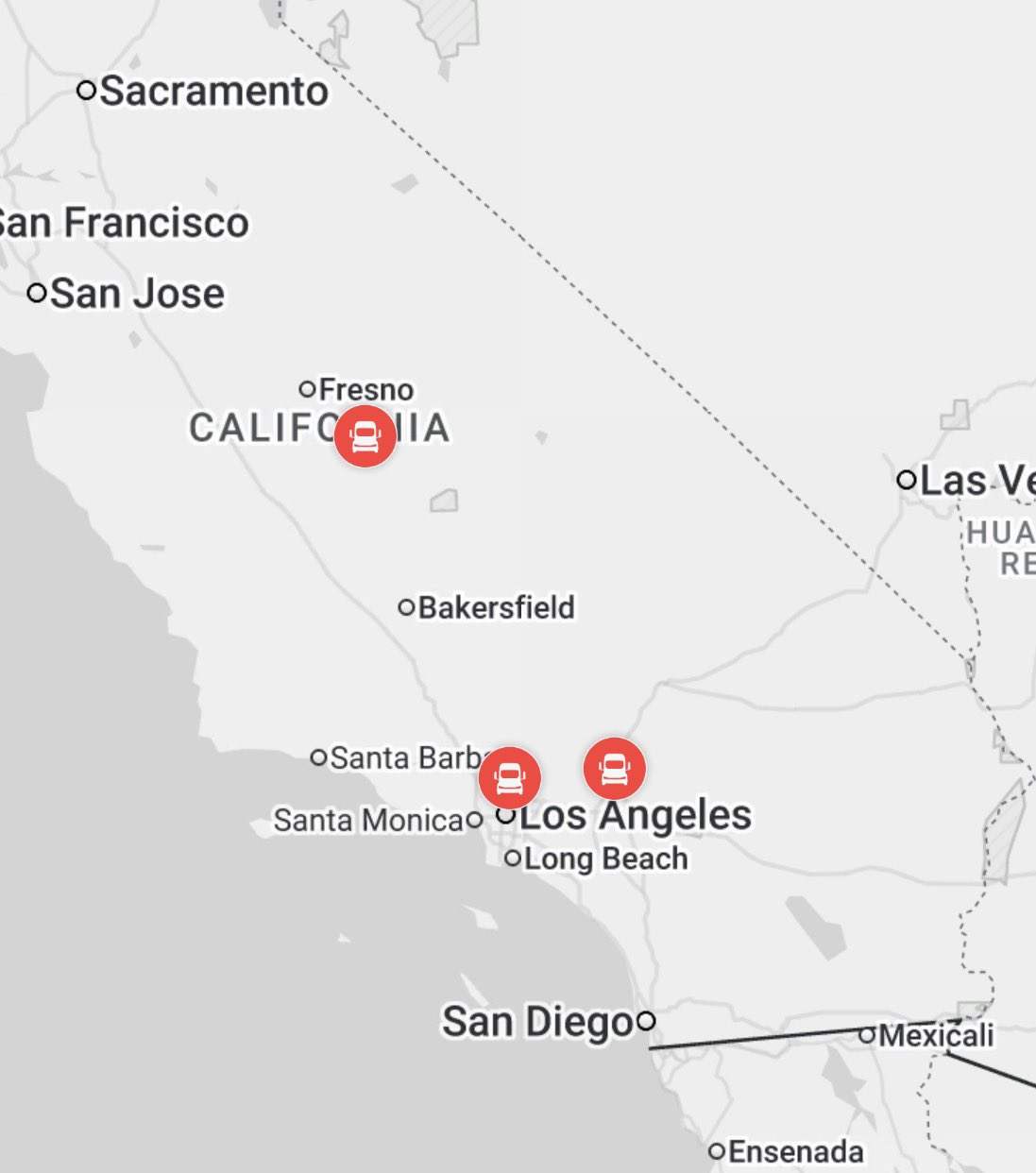
Tesla has just flipped the switch on its fifth Tesla Semi Megacharger station in the United States, and the momentum is undeniable. Located in Tulare, California, this new four-stall site marks another critical milestone in building the high-power charging backbone required for mass-market electric Class 8 trucking. With Tesla targeting more than 30 Megacharging stations and over 200 megawatt-capable posts by the end of 2026, the infrastructure that will unlock long-haul electric freight is rapidly taking shape. This post dives deep into the technical capabilities, network expansion details, real-world implications, and why this hardware is a game-changer for the industry.
Key Features & Advantages
- ✅ Up to 1.2 MW (1,200 kW) peak power per charging stall — among the highest commercially available rates for heavy-duty trucks
- ✅ Approximately 60% state-of-charge recovery in just 30 minutes, perfectly aligned with federal Hours-of-Service rest break requirements
- ✅ MCS 3.2 (Megawatt Charging System) connector for future-proof, standardized high-power charging
- ✅ V4 power cabinet architecture delivering high efficiency (>96%) and flexible power sharing across dual posts
- ✅ Public and depot-ready designs that support both corridor charging and private fleet operations
- ✅ Strategic placement at high-traffic truck stops (including Pilot/Flying J locations) for seamless driver workflows
Technical Specifications
The Tesla Megacharger is engineered specifically for the production Tesla Semi and other MCS-compatible heavy-duty vehicles. Here are the hard numbers:
- Peak power per stall: Up to 1.2 MW (1,200 kW)
- Power cabinet output: Up to 1,200 kW shared across two charging posts (full 1.2 MW available to a single post when used alone)
- Continuous current: 1,100 A
- Voltage range: 0–1,000 VDC (cabinet: 180–1,000 VDC)
- Charging standard: MCS 3.2
- Cable length: 3 meters (liquid-cooled)
- Cabinet efficiency: Greater than 96%
- Cabinet dimensions: 1,175 × 1,390 × 1,925 mm
- Cabinet weight: 1,100 kg
- Post dimensions: 334 × 891 × 1,946 mm
- Post weight: 100 kg
- Communication: ISO 15118-2, OCPI capable
- Optional payment terminal: Available
- Tesla Semi Long Range battery: 822 kWh usable
- Tesla Semi Standard Range battery: 548 kWh usable
- Energy consumption: 1.7 kWh/mile (both trims)
- Range at 82,000 lb GCW: 500 miles (Long Range) / 325 miles (Standard Range)
- Drive power: 800 kW peak (tri-motor configuration)
In-Depth Technical Analysis
The Power Delivery Architecture
At the heart of every Megacharger station is Tesla’s V4 cabinet. Each cabinet houses modular power electronics trays that convert AC grid power into high-voltage DC. The design allows dynamic power allocation: when only one post is in use, the full 1.2 MW flows to that vehicle. When both posts are occupied, power is shared intelligently. This architecture delivers exceptional power density while maintaining efficiency above 96% and low-noise operation that does not require external ventilation.
The liquid-cooled MCS 3.2 connector and cable are critical enablers. At 1,100 continuous amps, thermal management becomes non-negotiable. Tesla’s immersion-cooled connector and liquid-cooled cable keep temperatures in check even during sustained megawatt-level sessions, ensuring reliable performance across repeated high-power cycles.
Matching the Semi’s Battery Chemistry and Thermal Limits
The production Tesla Semi uses Tesla’s 4680 NCMA cells in modular packs. The Long Range variant’s 822 kWh usable capacity and the Standard Range’s 548 kWh pack are both engineered to accept the full 1.2 MW peak. Real-world charging curves show the system can deliver roughly 60% state-of-charge recovery in 30 minutes under ideal conditions — a figure deliberately matched to the mandatory rest break window for commercial drivers. At peak rates, the system adds approximately 20 kWh per minute, translating into hundreds of miles of range during a single stop.
Network Scaling Strategy
Tesla is pursuing a dual-track approach: public corridor stations (often co-located with Pilot and Flying J travel centers) and private “Semi Charging for Business” depot installations. The public network prioritizes major freight corridors (I-5, I-10, I-75, I-16 and others). By the end of 2026 the company expects more than 30 stations online, representing over 200 megawatt-capable posts. Early sites have ranged from four to eight stalls, with larger footprints appearing as grid capacity and demand grow.
Latest News & X Highlights
On October 10, 2026, Tesla confirmed the opening of its fifth U.S. Semi Megacharger station. The official announcement and supporting coverage captured the rapid pace of deployment:
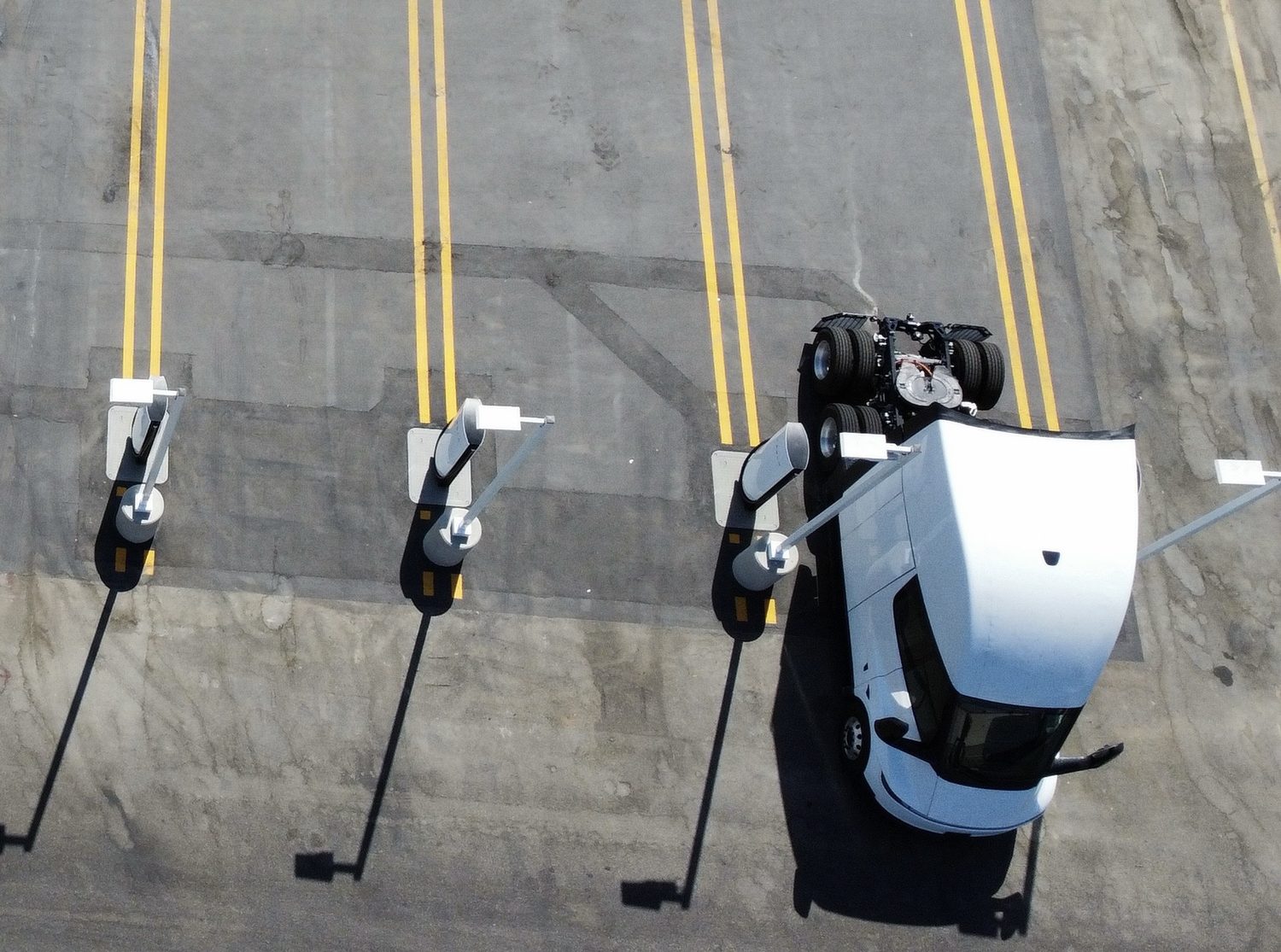
The post highlights that the new Tulare, California location brings the total to five stations, with Tesla projecting more than 30 Megacharging sites and over 200 megawatt charging posts operational by year-end 2026. Earlier in the same week, Tesla activated its first East Coast stations in Georgia (Conley with eight stalls and Ellabell with six stalls at a Pilot travel center), demonstrating simultaneous expansion on both coasts.
Real-world Applications & Implications
The 30-minute / 60% charge window is the operational breakthrough that makes long-haul electric trucking practical. Drivers already must take a 30-minute break after eight hours of driving. With a Megacharger, that mandatory stop becomes a productive energy refill rather than pure downtime. A Long Range Semi can therefore leave a port or distribution center, cover several hundred miles, recharge during the rest break, and continue without adding schedule risk.
For fleet operators, the implications are profound. Lower energy costs per mile, reduced maintenance (no diesel particulate filters, no engine overhauls), quieter operation, and zero tailpipe emissions at the vehicle level translate into compelling total-cost-of-ownership advantages — especially on high-utilization corridors. The expanding public network also lowers the barrier for smaller fleets that cannot justify private depot infrastructure from day one.
Partnerships with Pilot and Flying J place the chargers exactly where truckers already stop for food, restrooms, and overnight parking. This co-location strategy accelerates adoption by eliminating the need for drivers to detour to specialized charging sites.
Final Verdict
Tesla’s fifth Semi Megacharger station is far more than another pin on the map — it is proof that the company is executing on the infrastructure required to scale electric Class 8 freight. With 1.2 MW peak power, MCS 3.2 compatibility, and a clear path to more than 200 megawatt posts by the end of 2026, the Megacharger network is turning the Tesla Semi from a promising prototype into a commercially viable workhorse. The combination of production vehicle volume, standardized high-power charging, and strategic corridor placement positions Tesla to lead the electrification of long-haul trucking. The next twelve months will be decisive, and the pace already on display suggests the industry is about to move much faster than many expected. The electric freight era is no longer theoretical — it is charging at 1.2 megawatts.