

The future of freight just accelerated into overdrive. Tesla has officially refreshed the Tesla Semi page with hard numbers that confirm what early operators already suspected: this isn’t just another electric truck—it’s a game-changing platform engineered to dismantle the economics of diesel forever. From 500-mile fully loaded range and 1.2 MW Megacharging to integrated fleet software and over-the-air intelligence, the Tesla Semi is rewriting the rules of Class 8 trucking. In this deep technical review we break down every critical specification, analyze real-world performance data, examine the latest X highlights, and explore what this means for fleet operators, logistics networks, and the global energy transition.
Key Features & Advantages
- ✅ Dramatically lower operating costs than diesel—energy and maintenance savings enable full payback within a typical truck ownership cycle
- ✅ Up to 500 miles of range while fully loaded at highway speeds
- ✅ Megacharger capability delivering up to 1.2 MW peak power—recovering approximately 60% of range in just 30 minutes
- ✅ Purpose-built fleet software suite including live vehicle status, intelligent Trip Planner, remote diagnostics, and seamless OTA updates
- ✅ Far fewer moving parts than traditional diesel powertrains, translating to higher uptime and reduced workshop visits
- ✅ Instant torque delivery and superior acceleration for improved safety and driver experience
- ✅ Scalable architecture designed for future autonomy and continuous performance upgrades

Technical Specifications
- Range: Up to 500 miles fully loaded
- Charging: Megacharger support up to 1.2 MW peak power; ~60% range recovery in 30 minutes
- Energy Efficiency: Significantly lower energy cost per mile versus diesel equivalents
- Powertrain: Multi-motor electric drive system delivering instantaneous torque and high continuous power output
- Maintenance: Dramatically reduced parts count compared with diesel engines, transmissions, and exhaust after-treatment systems
- Software: Native fleet management platform with live telemetry, Trip Planner, remote support, and over-the-air capability
- Payload & Configuration: Optimized for standard Class 8 trailer operations with competitive payload capacity
- Connectivity: Continuous vehicle-to-fleet data link enabling predictive maintenance and route optimization
- Thermal Management: Advanced battery and power electronics cooling designed for sustained high-power operation and extreme ambient conditions
In-Depth Technical Analysis
The Tesla Semi represents one of the most ambitious applications of high-voltage battery electric architecture in the commercial vehicle sector. At its core is a high-energy-density battery pack engineered to deliver 500 miles of range under full load—an achievement that places the vehicle firmly in the long-haul sweet spot previously dominated by diesel.
Energy Economics & Total Cost of Ownership

The standout claim is that the Semi can pay for itself within a typical ownership period purely through lower energy costs and drastically reduced maintenance. Diesel trucks consume fuel at roughly 6–8 mpg under real-world loaded conditions, while the Semi’s electric powertrain converts energy far more efficiently. Combined with the elimination of oil changes, diesel particulate filters, selective catalytic reduction systems, and complex multi-speed transmissions, the operational cost delta becomes decisive. Fleet operators can now model payback windows measured in years rather than decades.
Megacharging Architecture
The 1.2 MW Megacharger capability is a technical leap. Delivering roughly 20 kWh per minute at peak rates allows the battery to regain approximately 60% of its usable energy in a 30-minute window—aligning perfectly with mandatory driver rest periods under hours-of-service regulations. This is not merely fast charging; it is operationally synchronized charging that removes range anxiety from the logistics equation.
Software-Defined Trucking

Unlike traditional trucks that are essentially mechanical platforms with limited electronics, the Tesla Semi ships with a comprehensive fleet software stack. Live status monitoring, intelligent Trip Planner routing that accounts for elevation, traffic, and charger availability, remote support, and continuous OTA updates transform the vehicle into a networked asset. Future capability—including progressive autonomy—can be delivered without hardware redesigns, protecting residual value and extending the platform’s competitive window.
Mechanical Simplicity & Reliability
With far fewer moving parts, the Semi’s powertrain inherently offers higher mean time between failures. Electric motors operate with minimal wear, regenerative braking reduces friction brake usage, and the absence of a traditional multi-speed transmission removes one of the most failure-prone components in Class 8 vehicles. The result is higher vehicle availability and lower total maintenance cost per mile.
Latest News & X Highlights
Tesla officially launched the refreshed Tesla Semi product page with a clear set of performance claims that have electrified the industry. The official Tesla Semi account highlighted the core advantages:
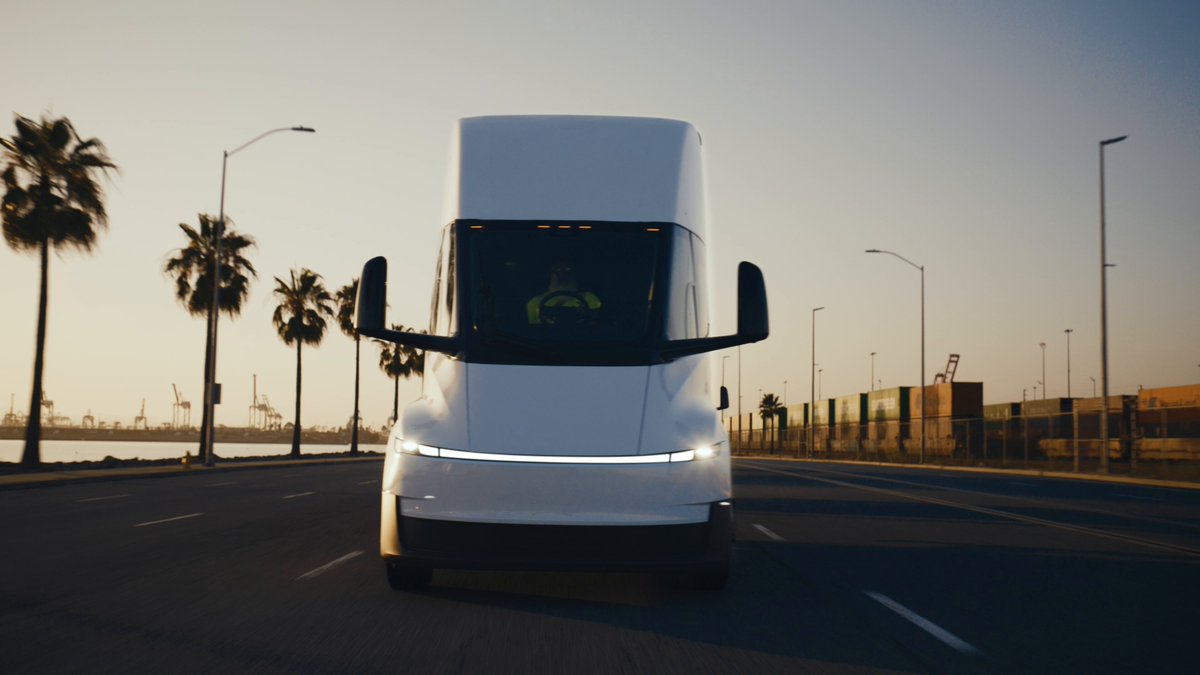
Shortly afterward, Tesla itself amplified the message with a powerful video and the simple declaration “BAMF,” underscoring the company’s confidence in the platform:

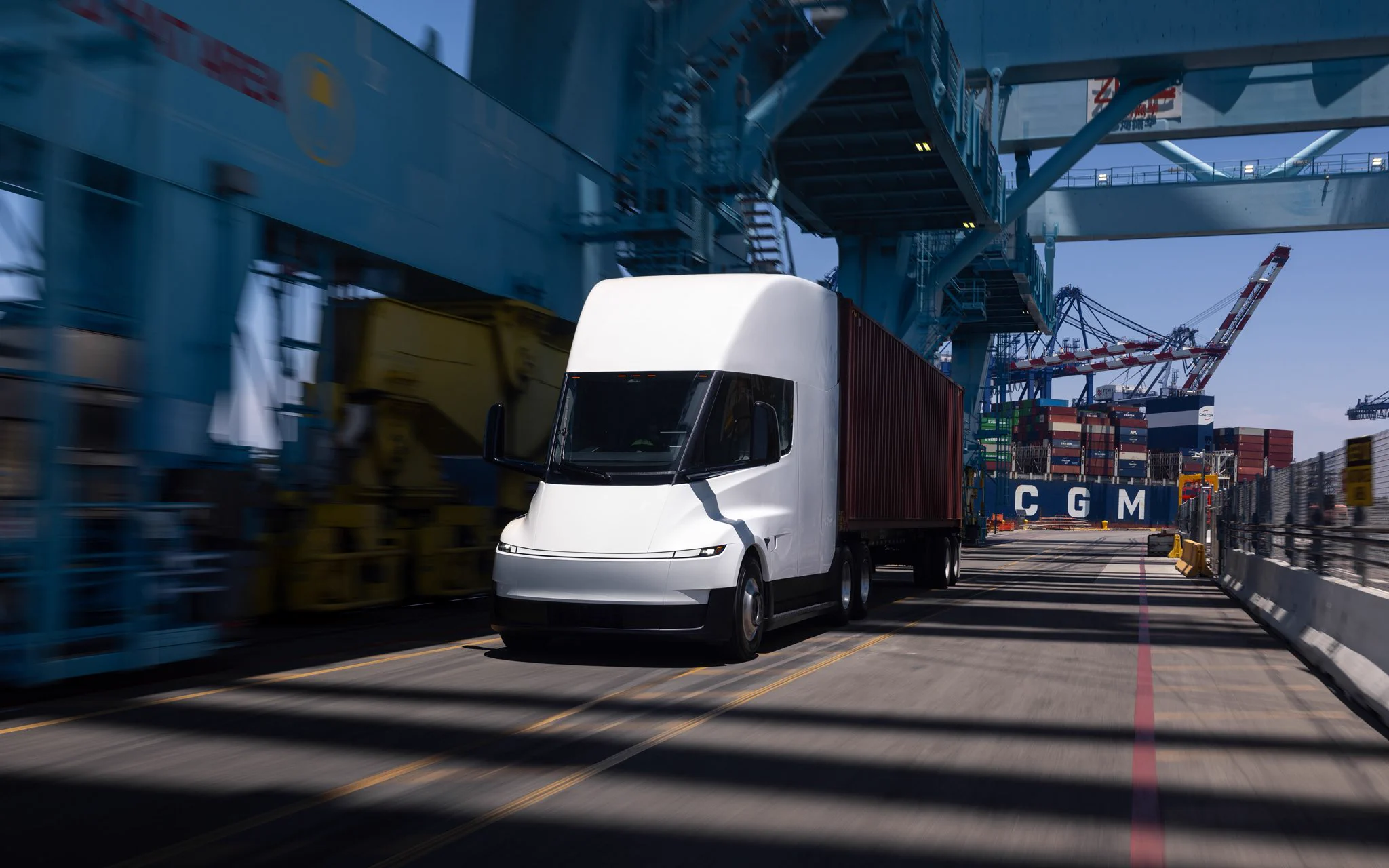
Real-world operations are already underway. Footage captured by Sawyer Merritt shows a Tesla Semi arriving at a port facility to unload a trailer—evidence that the vehicle is actively performing everyday freight work rather than remaining a prototype:
Real-world Applications & Implications
The Tesla Semi is positioned for high-utilization regional and long-haul routes where energy cost and uptime dominate the total cost of ownership equation. Port drayage, interstate corridor freight, and dedicated fleet loops between distribution centers are ideal early deployments. The 30-minute Megacharge window fits cleanly within mandatory driver breaks, allowing operators to maintain tight schedules without sacrificing range.
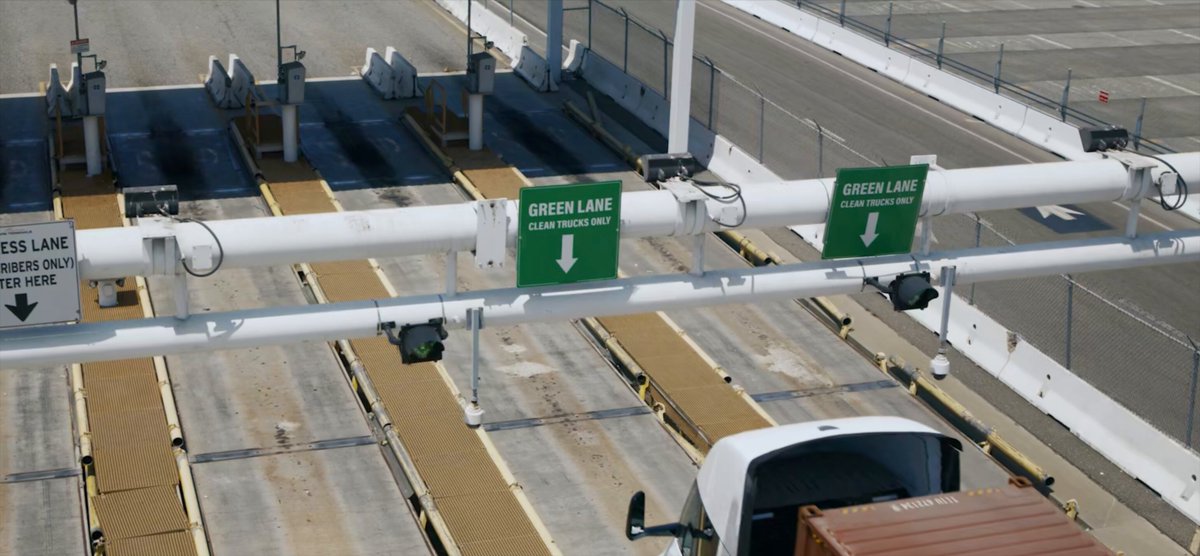
Beyond pure economics, the platform carries systemic implications. Widespread adoption will accelerate demand for high-power charging infrastructure along freight corridors. The software-defined nature of the vehicle opens pathways to platooning, predictive logistics, and eventual unsupervised autonomy—capabilities that diesel platforms simply cannot match through incremental upgrades. For shippers and fleet managers, the Semi offers a rare combination of lower operating cost, higher reliability, and future-proof architecture.
Final Verdict
The Tesla Semi is no longer a concept or a limited pilot vehicle—it is a production-ready, software-upgradable Class 8 platform that fundamentally alters the economics of heavy-duty trucking. With 500 miles of fully loaded range, 1.2 MW Megacharging, and a dramatically simplified mechanical architecture, Tesla has delivered a truck that can pay for itself through pure operational savings. As real-world data continues to accumulate and the Megacharger network expands, the Tesla Semi is poised to become the new benchmark for efficiency, reliability, and total cost of ownership. The age of electric freight has officially arrived—and it is accelerating hard.