

In the rapidly evolving world of EV charging infrastructure, Tesla continues to lead with groundbreaking innovations. The latest announcements from the Tesla Charging team highlight two pivotal developments: the end of V3 Supercharger cabinet production and the introduction of revolutionary Folding Unit Superchargers powered by V4 technology. This in-depth review dives into the technical specifications, real-world benefits, deployment advantages, and why these advancements position Tesla miles ahead of competitors.
The End of an Era: Farewell to V3 Supercharger Cabinets After 15,000+ Units
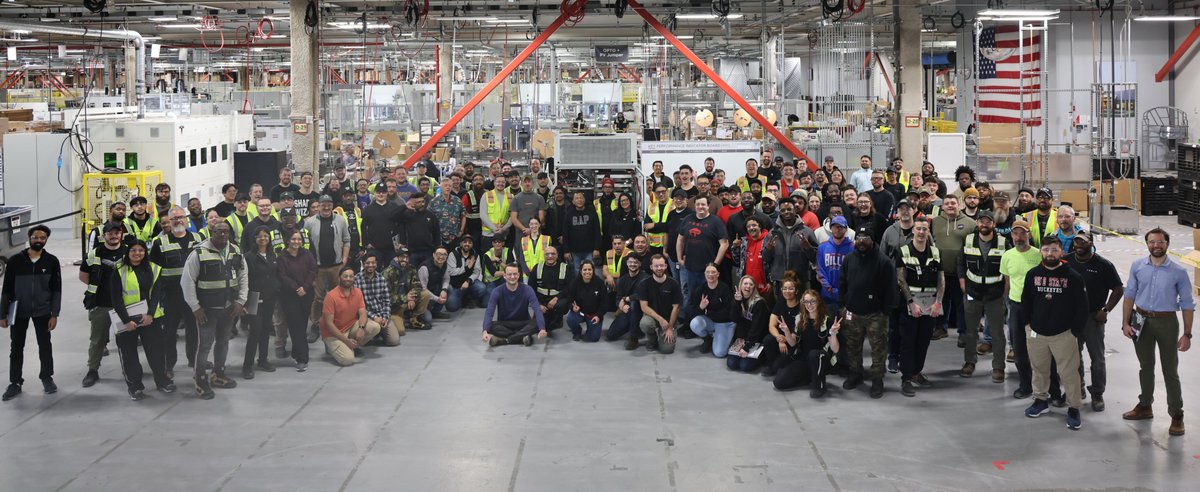
Gigafactory New York has officially produced its final V3 Supercharger cabinet, closing the chapter on over 15,000 units manufactured across seven years. This milestone marks the full transition to the next-generation V4 cabinet line, which is now ramping up production. V3 cabinets have been the backbone of Tesla’s Supercharger network, delivering reliable high-speed charging to millions of EVs worldwide. However, the shift to V4 represents a leap forward in power delivery, efficiency, and scalability.
The V3 era delivered consistent performance, but V4 cabinets bring higher power outputs, improved thermal management, and enhanced compatibility with next-gen vehicles like the Cybertruck. Tesla’s vertical integration—from design and manufacturing at Giga New York to global deployment—ensures seamless upgrades across the network.
Introducing Tesla’s Folding Unit Superchargers: Modular, Mobile, and 500kW Powerful
Building on the V4 foundation, Tesla has unveiled the Folding Unit Superchargers—a compact, transportable charging solution that redefines infrastructure deployment. Each unit features a V4 cabinet capable of 500kW charging, paired with eight individual charging posts. Two units can be loaded onto a single truck, creating a mobile powerhouse of 16 high-power stalls ready for rapid rollout.
The folding design allows for two configurations: folded for efficient transport and unfolded for full operational deployment. This innovation eliminates traditional on-site assembly bottlenecks, enabling plug-and-play installation without requiring a Tesla technician. The result? Dramatically accelerated network expansion at lower costs.
Technical Specifications: Breaking Down the Folding Unit Superchargers
- Power Output: V4 cabinet delivers up to 500kW continuous charging per unit, supporting ultra-fast sessions for vehicles with 800V architectures like the Cybertruck and future models.
- Charging Posts: 8 posts per Folding Unit, enabling simultaneous charging of multiple vehicles with intelligent power sharing.
- Truck Capacity: 2 complete units per standard truck transport (16 posts total), maximizing logistics efficiency.
- Configurations: Folded mode for compact shipping and storage; unfolded mode for immediate roadside or site deployment.
- Installation: Plug-and-play commissioning—no on-site technician required, reducing deployment time from weeks to days.
- Compatibility: Full backward support for all Tesla vehicles plus NACS-enabled third-party EVs via the expanding open network.
- Durability: Weatherproof, vandal-resistant design built for high-traffic locations, events, and emergency use.
These specs aren’t just incremental improvements—they represent a complete rethinking of charging hardware logistics. By pre-assembling and testing units at the factory, Tesla minimizes field errors and accelerates scaling.
Key Advantages: Faster, Cheaper, Better Than Any Competitor
- Deployment Speed: 2x faster rollout compared to traditional Supercharger builds. Sites that once took weeks can now go live in days.
- Cost Efficiency: Significantly lower per-stall installation costs—estimated 20% cheaper due to reduced labor, shipping, and on-site work.
- Scalability: One truck delivers 16x 500kW stalls, turning every delivery into an instant charging hub perfect for highways, events, or underserved areas.
- Flexibility: Ideal for temporary setups like festivals, construction sites, or disaster relief, while easily integrating into permanent stations.
- Network Impact: Accelerates Tesla’s goal of ubiquitous charging, lapping competitors who rely on slower, more expensive fixed installations.
From a technical standpoint, the 500kW capability future-proofs the network for higher-voltage vehicles, while the modular folding design optimizes supply chain logistics from Giga factories to deployment sites.
Real-World Applications and Strategic Implications
The Folding Unit Superchargers aren’t just hardware—they’re a strategic force multiplier for Tesla’s energy business. Imagine pulling up to a remote highway exit and seeing a full 16-stall station deployed overnight. Or major events gaining instant high-speed charging without months of planning. Third-party operators adopting NACS will also benefit from these turnkey solutions.
Combined with the V4 production ramp at Giga New York, Tesla is poised to expand the world’s largest charging network at an unprecedented pace. The transition from V3 to V4 ensures legacy sites can be upgraded efficiently, while new Folding Units fill gaps faster than ever.
- High-traffic urban corridors needing rapid density increases.
- Rural and interstate routes for long-distance EV travel.
- Private fleets, including Cybercab robotaxi hubs and commercial depots.
- Pop-up charging for concerts, sports events, and emergencies.
Early feedback from the community highlights excitement around reduced wait times and broader accessibility, reinforcing Tesla’s commitment to making EV ownership seamless.
Final Verdict: A Massive Leap Forward for EV Infrastructure
Tesla’s Folding Unit Superchargers, powered by V4 technology, represent the most significant advancement in charging infrastructure since the original Supercharger network launch. With 500kW output, 16 stalls per truckload, folding modularity, and technician-free deployment, these units deliver exactly what the EV revolution needs: faster, cheaper, and better infrastructure at scale.
The end of V3 production signals maturity in manufacturing, while the new Folding Units usher in a new era of agile expansion. For Tesla owners, investors, and the entire EV industry, this is more than an upgrade—it’s a blueprint for sustainable, high-speed global charging dominance.
If you’re planning road trips, fleet operations, or simply following the EV space, keep an eye on these deployments. Tesla isn’t just building chargers—they’re redefining what’s possible.