

Rocket Lab just dropped a game-changer for the entire space industry. After three decades of reliance on germanium wafers for multi-junction solar cells, the company has officially released IMM Apex into production — a high-efficiency, germanium-free solar cell that delivers 31.5% Beginning-of-Life efficiency with a stunning 40% lower cell mass. This isn’t just an incremental upgrade. It’s a direct response to critical mineral supply constraints, rising costs, and the exploding demand for satellite power. In this deep dive, we break down the technical specs, the engineering breakthroughs, the latest Neutron progress with the iconic Hungry Hippo fairing, and why IMM Apex could reshape how every future spacecraft gets powered.
Key Features & Advantages
- ✅ Germanium-free design — completely eliminates reliance on supply-constrained critical metals that have dominated space solar cells for 30 years
- ✅ 31.5% Beginning-of-Life conversion efficiency — competitive with the best multi-junction cells while slashing mass
- ✅ 40% lower cell mass — delivers best-in-class specific power (watts per kilogram)
- ✅ True drop-in replacement — mechanical and electrical compatibility with heritage germanium-based cells, no retooling required
- ✅ Proven radiation hardness and thermal performance — built on a decade of flight heritage including NASA’s Ingenuity Mars Helicopter
- ✅ Scalable manufacturing — multi-100-kilowatt production volumes ready now at Rocket Lab’s Albuquerque facility
- ✅ Faster production timelines — optimized processes reduce lead times compared to traditional germanium cells
Technical Specifications
- Cell Architecture: Inverted Metamorphic (IMM) multi-junction design
- Beginning-of-Life Efficiency: 31.5%
- Mass Reduction: 40% lower cell mass versus conventional germanium-based multi-junction cells
- Specific Power: Best-in-class watts-per-kilogram performance
- Substrate: Germanium-free (eliminates critical mineral dependency)
- Compatibility: Mechanical and electrical drop-in replacement for heritage germanium solar cells
- Radiation Hardness: Excellent performance maintained under space radiation environments
- Temperature Performance: Superior stability across operational temperature ranges
- Production Capacity: Multi-100-kilowatt volumes at Rocket Lab’s Albuquerque, New Mexico facility
- Flight Heritage Foundation: Builds directly on IMM technology that powered NASA’s Ingenuity Mars Helicopter and more than 1,100 satellites currently on orbit
- Qualification Standard: Leverages over a decade of rigorous testing and AIAA-S111-level heritage from previous IMM generations
In-Depth Technical Analysis
The Germanium Problem and Why IMM Apex Matters
For the last three decades, nearly every high-efficiency space solar cell has been grown on germanium wafers. Germanium provides an excellent lattice match for the multi-junction epitaxial layers that convert sunlight into electricity at high efficiency. But germanium is a critical mineral with constrained supply, rising costs, and geopolitical risk. Rocket Lab’s decision to remove it entirely is a strategic masterstroke.
IMM Apex uses an inverted metamorphic architecture. Instead of growing the cell lattice-matched to a germanium substrate, the layers are grown in reverse order on a different substrate that is later removed. This allows engineers to optimize each junction for maximum photon absorption while eliminating the heavy, expensive germanium wafer. The result is a cell that is both lighter and free from the mineral bottleneck.
Mass, Efficiency, and Specific Power Trade-offs
The 40% mass reduction is not a marketing number — it is a fundamental advantage in orbital mechanics. Every kilogram saved on solar arrays translates into more payload mass, lower launch costs, or additional propellant for longer mission life. When you combine that mass savings with 31.5% Beginning-of-Life efficiency, IMM Apex delivers exceptional specific power. For constellation operators flying hundreds or thousands of satellites, the cumulative savings become enormous.
- Conventional germanium triple-junction cells typically sit in the 29.5–31.3% efficiency range
- IMM Apex hits 31.5% while weighing 40% less
- The previous Rocket Lab IMM-α cell reaches 32.0% but was not designed as a drop-in replacement; Apex prioritizes volume production and seamless integration
Drop-In Compatibility — The Quiet Game-Changer
Many advanced solar technologies fail commercially because they require completely new array designs, new panel tooling, and new qualification campaigns. IMM Apex avoids that trap. Rocket Lab engineered the cell to match the mechanical footprint and electrical interfaces of the heritage germanium products already qualified by satellite manufacturers. That means existing solar array designs can adopt Apex without major redesign or capital expenditure. For constellation operators racing to deploy, this is a decisive advantage.
Manufacturing Scale and Vertical Integration
Rocket Lab is not simply announcing a lab cell. The company has invested in optimized manufacturing processes and targeted capital at its Albuquerque facility to enable multi-100-kilowatt production volumes. Combined with Rocket Lab’s broader vertical integration — from cells to full solar panels to complete spacecraft — IMM Apex fits into a closed-loop supply chain that few competitors can match.
Latest News & X Highlights
Rocket Lab itself announced the production release of IMM Apex with a clear message about breaking free from germanium dependence:
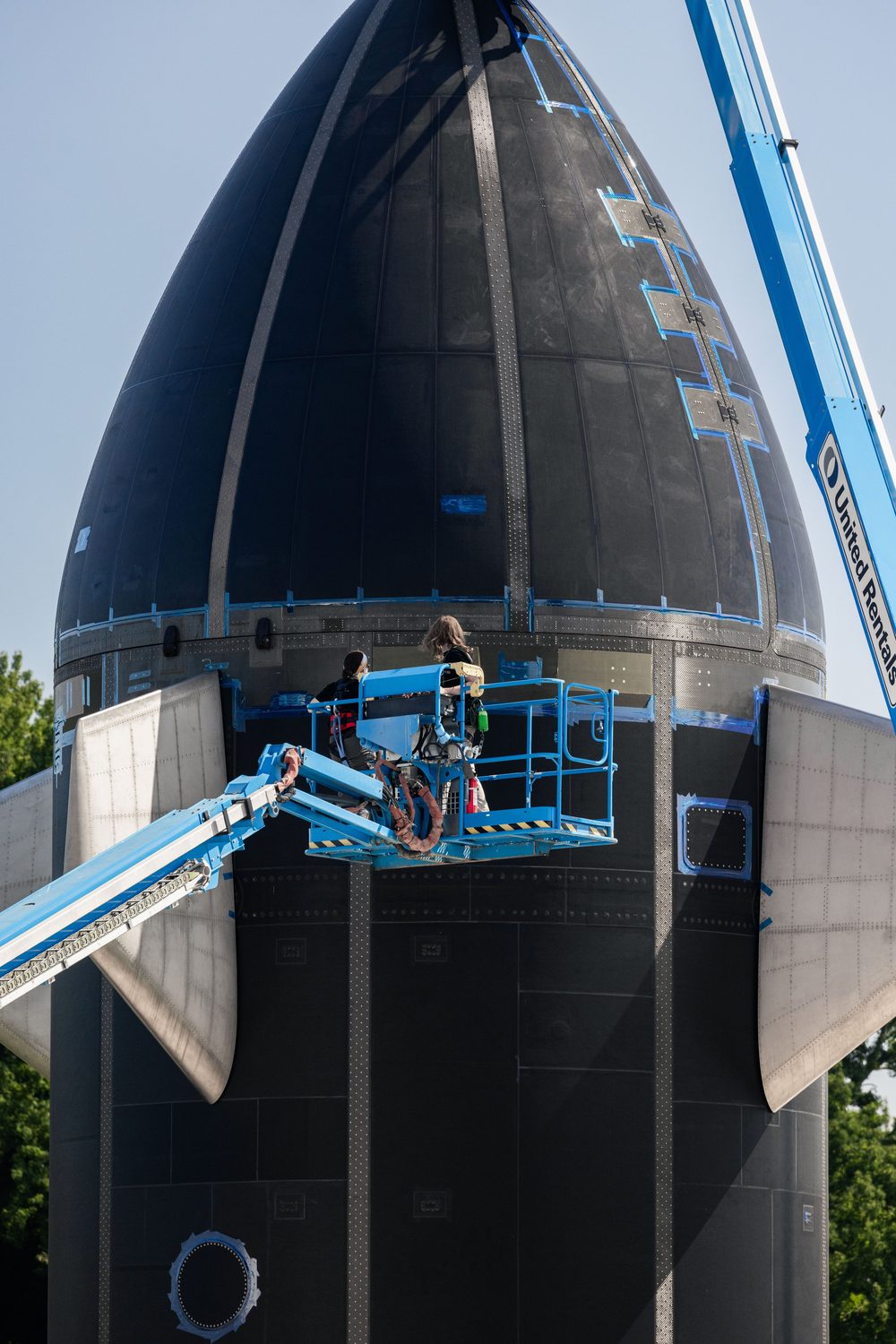
Meanwhile, parallel progress continues on Neutron. The reusable Hungry Hippo fairing has completed critical checkouts and is preparing for integration:
Earlier testing captured the dramatic opening and closing of the permanently attached fairing halves under flight-like conditions:
Real-world Applications & Implications
IMM Apex is positioned to power the next generation of LEO constellations, GEO communications satellites, lunar landers, and deep-space probes. The mass savings directly increase payload capability on every launch vehicle, including Rocket Lab’s own Electron and the upcoming Neutron. For national security missions that demand radiation-hard, high-reliability power with secure supply chains, a germanium-free cell manufactured in the United States is a strategic asset.
- Mega-constellations: Lower mass per satellite means more satellites per launch or reduced launch costs across the entire fleet
- Deep-space missions: Higher specific power and proven LILT (Low-Intensity Low-Temperature) heritage from the IMM family support missions beyond Earth orbit
- National security: Reduced dependence on critical minerals strengthens supply-chain resilience
- Commercial GEO: Drop-in compatibility allows rapid adoption on existing high-power bus designs
On the launch side, Neutron’s Hungry Hippo fairing represents the same philosophy of elegant, reusable engineering. By keeping the fairing permanently attached to the first stage, Rocket Lab eliminates the need to recover and refurbish separate fairing halves. The structure has already withstood 275,000 pounds of simulated Max-Q loads and demonstrated open/close cycles in 1.5 seconds — less than half the time allocated for stage separation and reorientation. Together, IMM Apex and Neutron form a vertically integrated capability from solar power to medium-lift launch.
Final Verdict
IMM Apex is more than a new solar cell. It is Rocket Lab’s declaration that the space industry no longer needs to accept germanium as a permanent bottleneck. With 31.5% efficiency, 40% less mass, drop-in compatibility, and multi-100-kilowatt production capacity already online, the technology is ready for immediate adoption. Combined with the rapid maturation of Neutron and its revolutionary Hungry Hippo fairing, Rocket Lab continues to execute on a vision of accessible, high-performance space infrastructure. The next decade of satellite power and launch capability just got a lot more exciting — and a lot more independent of critical mineral constraints. The future of space power is germanium-free, and it is shipping now.