

The Boring Company just dropped a wave of game-changing updates that push tunnel boring into overdrive. From the brand-new Vertical Cassette 7 continuous conveyor system that can move nearly 1,000 tons of muck per hour, to Prufrock machines chewing through Texas test tunnels and Nashville limestone at record pace, and the Vegas Loop exploding to 123 entitled stations—this is the future of underground transportation arriving faster than ever. In this deep-dive technical review we break down every hard number, every engineering leap, and exactly why these systems are rewriting urban mobility.
Key Features & Advantages
- ✅ Vertical Cassette 7 (VC7) delivers continuous muck removal at 990 tons/hour
- ✅ Supports TBM advance rates up to 4 miles per week
- ✅ Infinite tunnel length capability with Belt Boosters every 1.5 miles
- ✅ Extreme maneuverability – minimum curve radius of just 500 ft for dense urban environments
- ✅ 650+ improvements over VC6 focused on setup speed, reliability, and power efficiency
- ✅ Dual Prufrock machines boring simultaneously in Nashville through 10,000+ psi limestone
- ✅ Vegas Loop now entitled for 123 stations after Clark County approval of 19 additional stops
- ✅ Point-to-point architecture enabling potential stations at every driveway
Technical Specifications
Here are the hard numbers that define the new generation of Boring Company systems:
- Vertical Cassette 7 (VC7)
- Height: 37 ft
- Weight: ~220,000 lb
- Max muck conveyance rate: 990 tons/hour (at 50% loaded belt)
- Max supported TBM advance rate: 4 miles/week
- Minimum radius of curvature: 500 ft
- Belt speed: 660 ft/minute
- Supported tunnel length: infinite (with Belt Boosters every 1.5 miles)
- Improvements vs VC6: 650+
- Prufrock-5
- Approximate weight: 900,000 lb
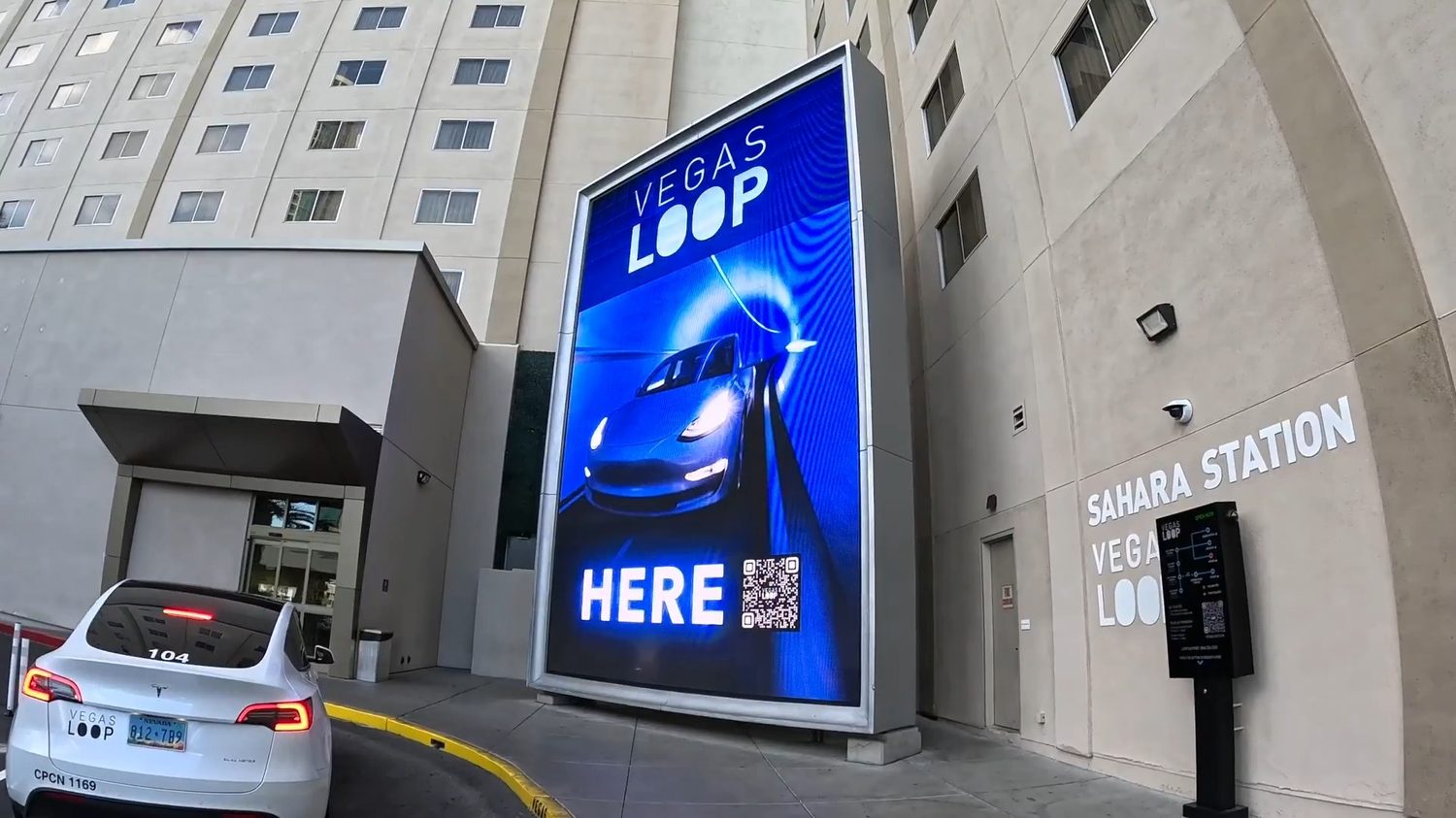
- Status: Completed test-tunnel in Bastrop, Texas – scheduled to re-launch in November
- Prufrock-MB1 & Prufrock-MB2 (Nashville)
- Operating simultaneously through 10,000+ psi limestone
- Muck transport: Continuous conveyor belt system with two vertically stacked side belts feeding the rock pit
- Vegas Loop Expansion
- Total entitled stations: 123 (after +19 stations approved by Clark County)
- Architecture: Pure point-to-point with zero intermediate stops
In-Depth Technical Analysis
Vertical Cassette 7 – Continuous Conveyor Revolution
Traditional tunnel boring has always been bottlenecked by muck removal. Every 15 inches of advance generates roughly one full dump truck of material. The Vertical Cassette 7 solves this with a continuous conveyor system engineered for extreme throughput and urban constraints.
Standing 37 feet tall and weighing approximately 220,000 pounds, VC7 moves muck at a maximum rate of 990 tons per hour when the belt is 50% loaded. Belt speed hits 660 feet per minute. Critically, the system maintains a tight 500-foot minimum radius of curvature—vital for navigating dense city grids without requiring massive surface disruption.
Perhaps the most impressive specification is infinite tunnel length support. By placing Belt Boosters every 1.5 miles, the conveyor chain can theoretically extend forever. Combined with 650+ targeted improvements over the previous VC6 generation—focused on faster setup, higher reliability, and better power efficiency—VC7 removes one of the classic constraints on high-speed tunneling.
Prufrock Fleet – Dual-Machine Assault on Hard Rock
While VC7 handles the logistics of muck, the Prufrock family of Tunnel Boring Machines does the heavy cutting. Prufrock-5, tipping the scales at roughly 900,000 pounds, has just completed a full test tunnel in Bastrop, Texas and is scheduled to re-launch in November. This validates the latest generation under real-world conditions before larger deployments.
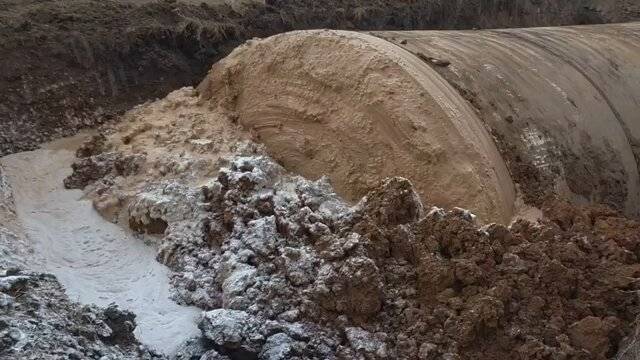
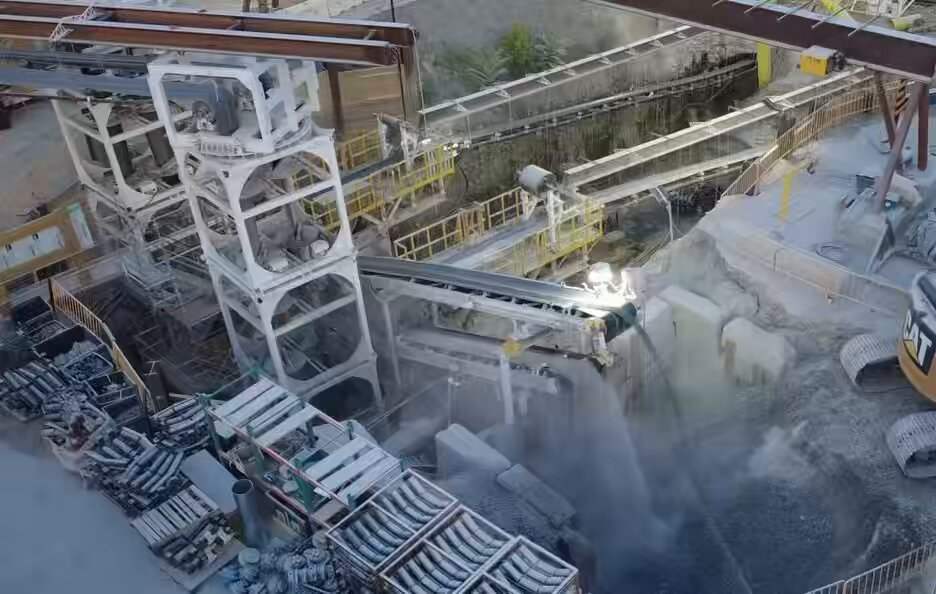
Even more striking is the simultaneous operation of Prufrock-MB1 and Prufrock-MB2 in Nashville. These machines are currently boring through limestone rated above 10,000 psi—material that would slow conventional TBMs to a crawl. Muck is extracted via continuous conveyor belts and then transferred onto two vertically stacked side belts that feed the rock pit. The visual of two machines advancing in parallel while the conveyor system keeps pace is pure engineering theater.
Vegas Loop – From Concept to City-Scale Network
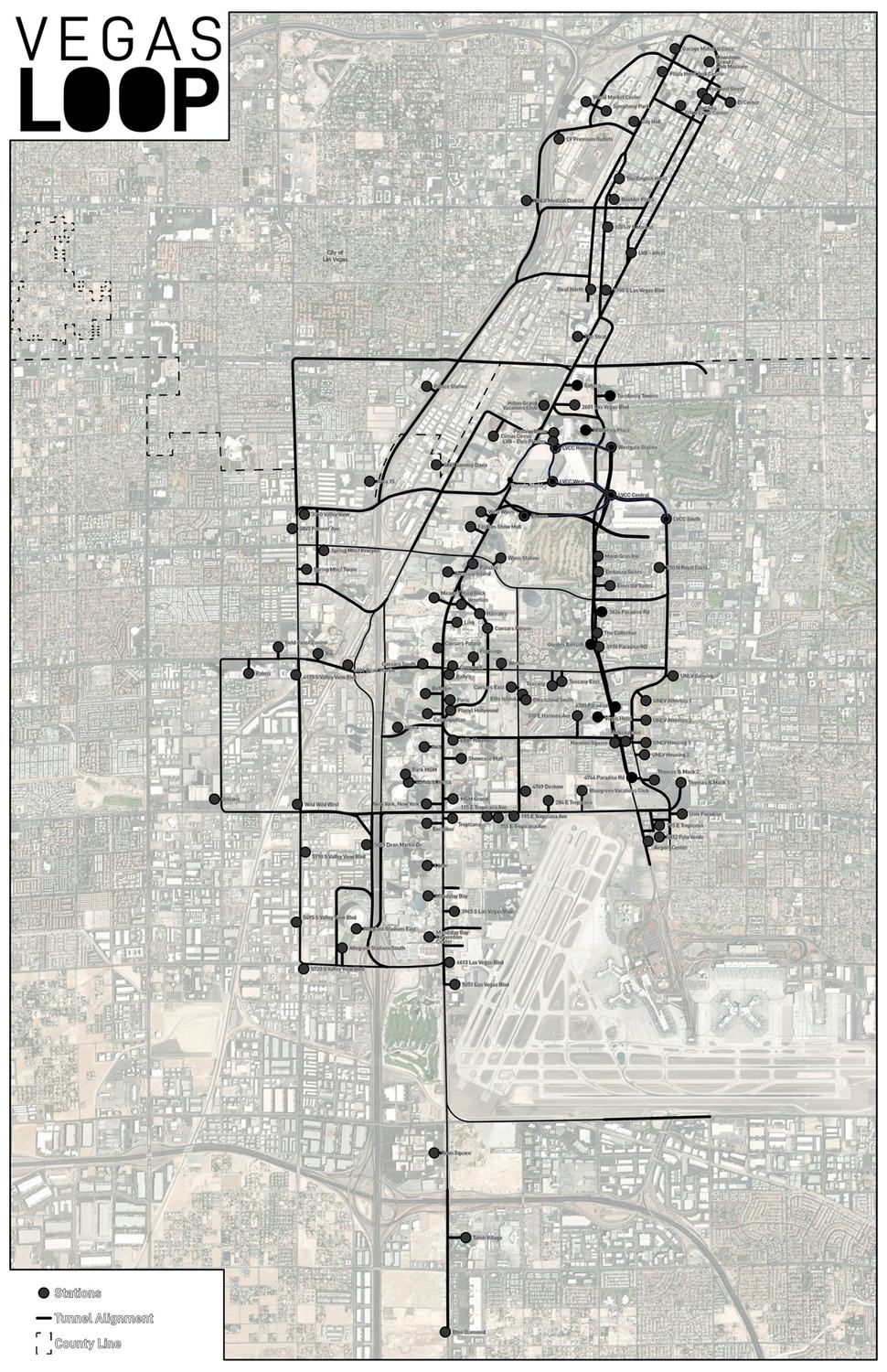
The Vegas Loop continues its rapid expansion. Clark County has approved an additional 19 stations, bringing the total entitled stations to 123. Because the system is pure point-to-point with no intermediate stops, the theoretical limit approaches a station in every driveway. Early operations at the Sahara Las Vegas station on the Strip have already demonstrated strong opening-week performance, validating both the passenger experience and the underlying tunnel network.
Latest News & X Highlights
The Boring Company has been highly active on X, releasing detailed technical videos and official updates:
On the VC7 launch: “Introducing Vertical Cassette 7 (VC7), our latest generation of continuous conveyor which transports muck/rock from the TBM to the surface. Height: 37 ft • Weight: ~220,000 lb • Max muck conveyance rate: 990 tons/hour (w/ 50% loaded belt) • Max supported TBM advance rate: 4 miles/week • Min Radius of Curvature: 500 ft • Belt speed: 660 ft/minute • Supported tunnel length: infinite (w/ ‘Belt Boosters’ every 1.5 miles) • 650+ improvements from VC6 focusing on setup speed, reliability, and power efficiency. Fun fact: for every 15 inches the machine mines, ~1 dump truck of material is generated!”
On Nashville dual-machine operations: “Drone footage of Prufrock-MB1 and Prufrock-MB2 tunneling simultaneously in Nashville. The 10,000+ psi limestone is transported from each boring machine via a continuous conveyor belt, completing its journey to the rock pit via the 2 vertically stacked side belts seen below.”
On Prufrock-5 progress: “Prufrock-5 finishing a test-tunnel in Bastrop, Texas. The ~900,000 lb boring machine will re-launch in November.”
On Vegas Loop expansion: “Thank you to @ClarkCountyNV for approving an additional 19 Vegas Loop stations – Vegas Loop is now entitled for 123 stations! Because Loop is point-to-point with no intermediate stops, in the limit, one could have a Loop station in every driveway!”
And on early Vegas Loop performance: “Great opening week for Vegas Loop at @SAHARALasVegas on the Strip!”
Real-world Applications & Implications
These advances are not theoretical. Continuous high-rate muck removal directly translates into faster tunnel completion rates—potentially 4 miles of advance per week under optimal conditions. Urban projects that once faced years of surface disruption can now progress with far less impact on city streets.
The ability to curve at 500-foot radii opens dense city cores that traditional TBMs could not economically serve. Simultaneous multi-machine boring, as demonstrated in Nashville, multiplies progress on large-diameter or multi-bore projects. And the Vegas Loop’s expansion to 123 stations proves the commercial model: private-sector tunneling can deliver high-capacity, zero-emission, point-to-point transit at speeds and densities far beyond surface light rail or traditional subways.
Longer term, the combination of Prufrock-class machines and VC7 logistics forms a scalable platform for Hyperloop-adjacent systems, inter-city high-speed tunnels, and even the first generation of multi-level underground networks in major metropolitan areas.
Final Verdict
The Boring Company has moved from proof-of-concept to industrial-scale execution. Vertical Cassette 7 removes the historic muck bottleneck with 990 tons/hour capacity and infinite-length support. Prufrock machines are simultaneously validating hard-rock performance in Texas and Nashville. And the Vegas Loop is already scaling toward a 123-station network that could redefine how cities move people.
With 650+ refinements in the latest conveyor generation, dual-machine operations underway, and regulatory green lights stacking up, the next few years will see tunnels appear faster, cheaper, and in more places than most urban planners thought possible. The underground future is no longer a distant vision—it is being bored, one high-speed advance at a time. The snail has been thoroughly beaten.