

In a thrilling leap forward for space navigation technology, Rocket Lab has just introduced the ST-HP, their newest high-performance star tracker engineered specifically for accuracy in high-radiation environments. This announcement comes hot on the heels of another major milestone: back-to-back Electron launches from different pads and countries, underscoring Rocket Lab’s unmatched operational cadence as the world’s most frequently launched small-lift rocket.
This in-depth review dives into the ST-HP’s groundbreaking capabilities, Rocket Lab’s relentless innovation in space systems, and how these advancements position the company as a leader in end-to-end space infrastructure. From technical specs to real-world implications, we’re breaking down why the ST-HP is set to shine on future MEO, GEO, and deep-space missions.
Key Features & Advantages
- ✅ Optimized for increased radiation environments – delivers superior accuracy where traditional star trackers falter.
- ✅ High-performance attitude determination for demanding orbits including MEO, GEO, and beyond.
- ✅ Part of Rocket Lab’s vertically integrated Space Systems division, ensuring supply chain control and faster delivery.
- ✅ Enhances overall spacecraft reliability and mission success in harsh space conditions.
- ✅ Complements Rocket Lab’s growing portfolio of spacecraft components and launch vehicles.
Technical Specifications
- Radiation Hardening: Specifically engineered for elevated radiation levels common in higher orbits and deep space.
- Accuracy: High-precision star tracking optimized for challenging radiation environments (exact performance metrics detailed in Rocket Lab’s release).
- Integration: Designed for seamless compatibility with modern spacecraft avionics and attitude control systems.
- Manufacturing: Produced in-house by Rocket Lab, enabling zero lead-time bottlenecks and improved margins through vertical integration.
- Applications: Ideal for satellites operating in MEO, GEO, and interplanetary trajectories.
In-Depth Technical Analysis
Background on Rocket Lab’s Space Systems Evolution
Rocket Lab has rapidly evolved from a launch provider to a full-spectrum space company. With the Electron rocket achieving record launch frequency and Neutron on track for late 2026, the company’s Space Systems division is delivering critical components like the ST-HP to meet the growing demands of complex missions.
Star Tracker Technology Breakdown
Star trackers are essential for spacecraft attitude determination, using stellar patterns to calculate precise orientation. The ST-HP builds on this foundation with enhanced radiation tolerance – a critical upgrade as missions push into higher radiation zones where cosmic rays and solar particles can degrade sensor performance.
- Radiation environments in MEO and GEO expose electronics to significantly higher particle flux than LEO.
- The ST-HP’s design mitigates these effects, maintaining accuracy and reliability over extended mission lifetimes.
- Vertical integration allows Rocket Lab to control high-rad component supply chains, reducing costs and eliminating delays.
This positions the ST-HP as a game-changer for constellation operators, government missions, and deep-space explorers seeking robust, high-performance navigation solutions.
Latest News & X Highlights
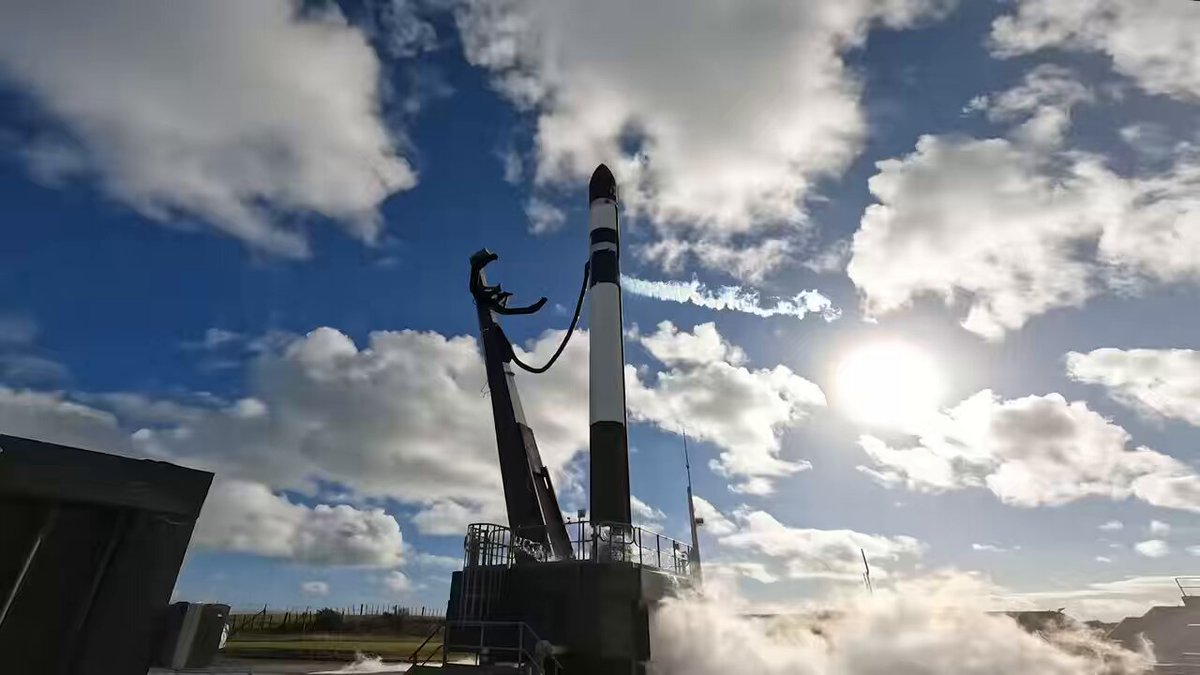
Rocket Lab continues to demonstrate operational excellence. Just hours apart from the ST-HP announcement, the company highlighted two Electron launches in two days from different launch pads and countries.
Fans and analysts on X are buzzing: “Controlling the supply chain for high-rad components = better margins and zero lead-time bottlenecks. $RKLB Space Systems division just keeps delivering.” Another post praised the engineering: “Brilliant engineering skills team RKLB. MEO, GEO and deep-space missions are growing substantially and RKLB is ahead of the game.”
These highlights reflect the excitement around Rocket Lab’s momentum – from rapid launch cadence to innovative hardware like the ST-HP.
Real-world Applications & Implications
The ST-HP opens doors for more ambitious missions. Satellite operators deploying constellations in radiation-heavy orbits can now rely on superior attitude control, improving data quality and spacecraft longevity. Deep-space probes benefit from reliable navigation far from Earth, while government and commercial GEO platforms gain enhanced resilience.
Combined with Electron’s proven track record (300+ kg to LEO, frequent launches from New Zealand and U.S. pads) and Neutron’s upcoming medium-lift capabilities (targeted for Q4 2026 with reusability features), Rocket Lab is enabling a new era of accessible, reliable space access.
Implications extend to faster constellation deployment, reduced mission risks, and stronger supply chain independence – key advantages in a competitive space economy.
Final Verdict
The ST-HP star tracker is another stellar example of Rocket Lab’s innovation and vertical integration prowess. Paired with their record-breaking launch cadence and Neutron’s promising development path, the company is solidly positioned to dominate the small-to-medium launch and space systems market.
With exciting hardware rolling out and operational maturity at an all-time high, the future looks incredibly bright for Rocket Lab and the entire space industry. This is just the beginning of what promises to be an extraordinary journey to the stars. 🚀