

Tesla just dropped a major transparency bomb on Full Self-Driving Supervised in Europe, and the numbers are nothing short of electrifying. With FSD already live in five EU countries, logging over a million kilometers every single day for more than 70,000 customers, and proving 4.1 times safer than human drivers across 100+ million kilometers of real public-road data, the path to broader EU approval is heating up fast. This deep-dive technical review breaks down the newly open-sourced safety evidence, the hard performance metrics, the regulatory strategy, and exactly why October 6, 2026 could mark a pivotal moment for autonomous driving on the continent.
Key Features & Advantages
- ✅ Already approved and actively used in five EU countries: Netherlands, Denmark, Belgium, Estonia, and Lithuania
- ✅ More than 70,000 customers logging over 1 million kilometers of supervised FSD driving every day
- ✅ 4.1× lower crash likelihood versus manual driving, measured across 100+ million kilometers on public EU roads
- ✅ Open-sourced key safety dashboard previously shared with all EU Member States to support the Netherlands approval
- ✅ Designed to comply with UN-R-171 DCAS regulation while seeking targeted exemptions under EU Article 39
- ✅ Dramatic reductions in major crashes, AEB activations, harsh braking, lane-change collisions, and driver fatigue
- ✅ Near-perfect scenario testing success rate (~98%) across weather, lighting, and country conditions
Technical Specifications
- Active countries: Netherlands (NL), Denmark (DK), Belgium (BE), Estonia (EE), Lithuania (LT)
- Daily usage: >1 million km per day by >70,000 customers
- Safety multiplier: 4.1× less likely to crash than manual driving (100 million+ km public-road dataset)
- Major crash reduction vs manual Tesla driving (3 billion km 2025 data): Highway 45%, Arterial 69%, City 50%, Local 40%
- AEB activation reduction: Up to 84% vs manual driving
- Harsh braking reduction: Up to 81% on highway and city streets
- Lane-change collision reduction: 99% of minor collisions on highway, 93% on non-highway (377 million fleet maneuvers)
- Driver fatigue events: 67% reduction on highway vs manual
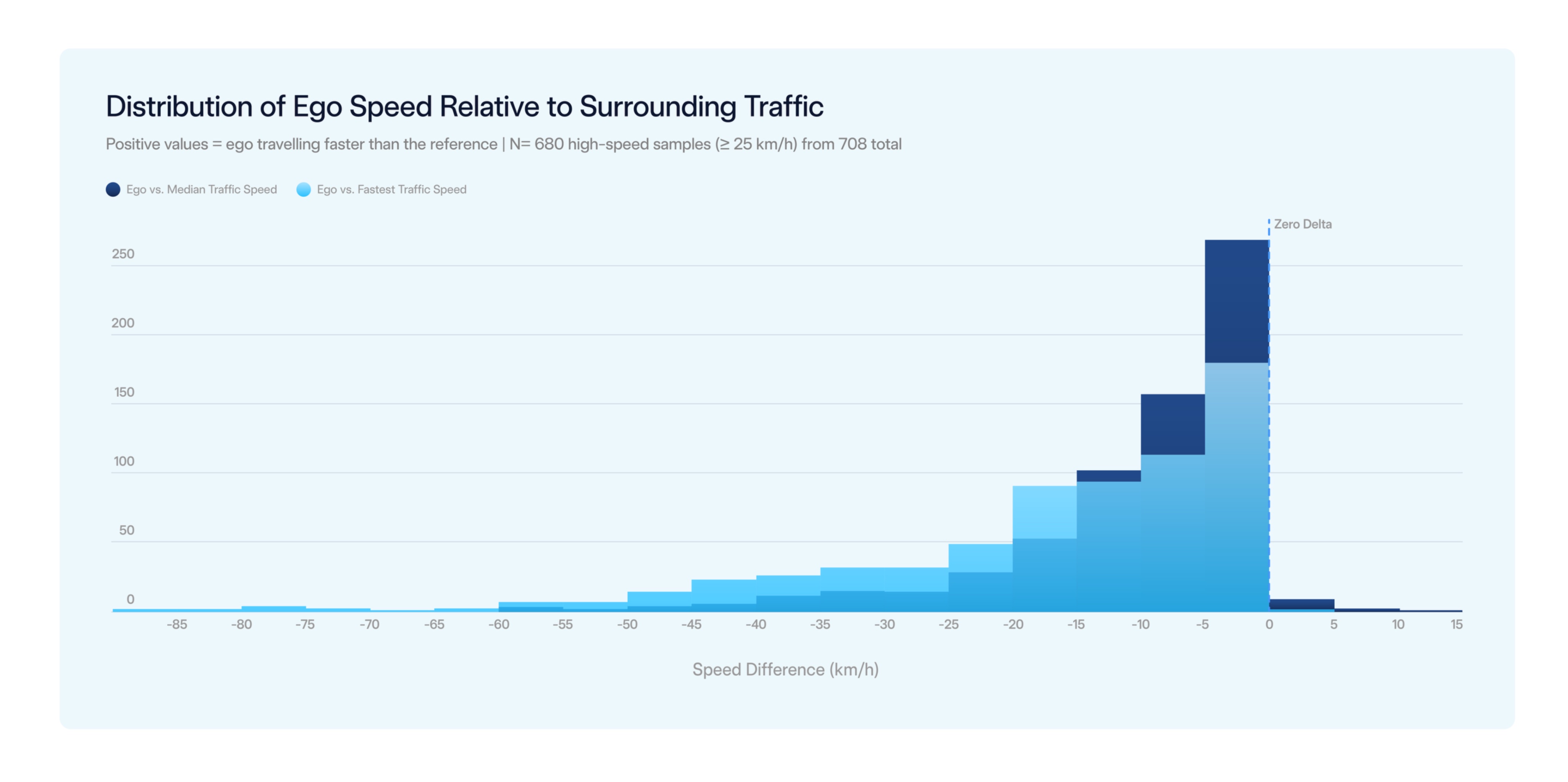
- Speed compliance: Drives at or below surrounding traffic speed 98% of the time
- Engineering fleet: 1.6 million km with zero at-fault major or minor collisions
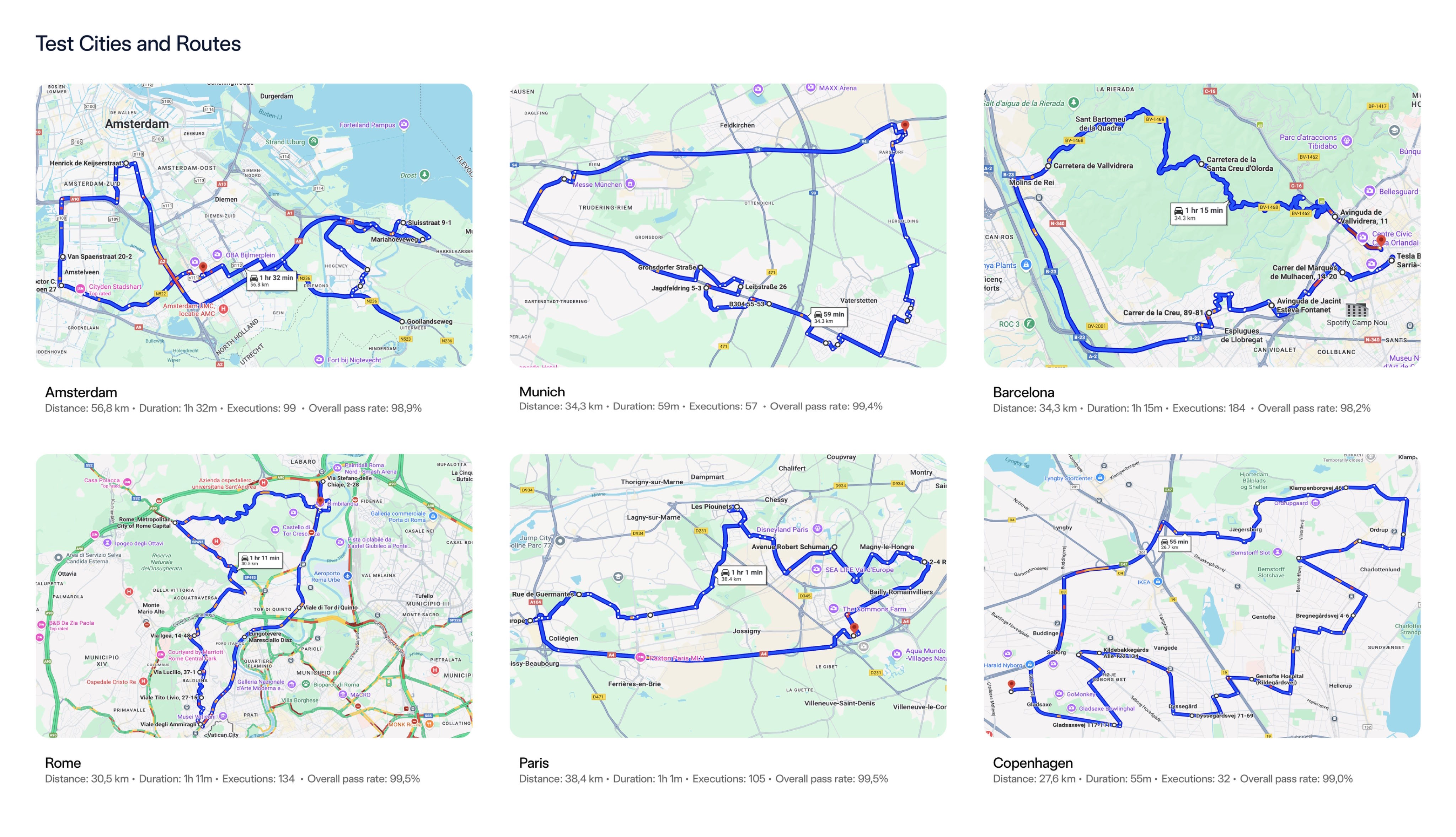
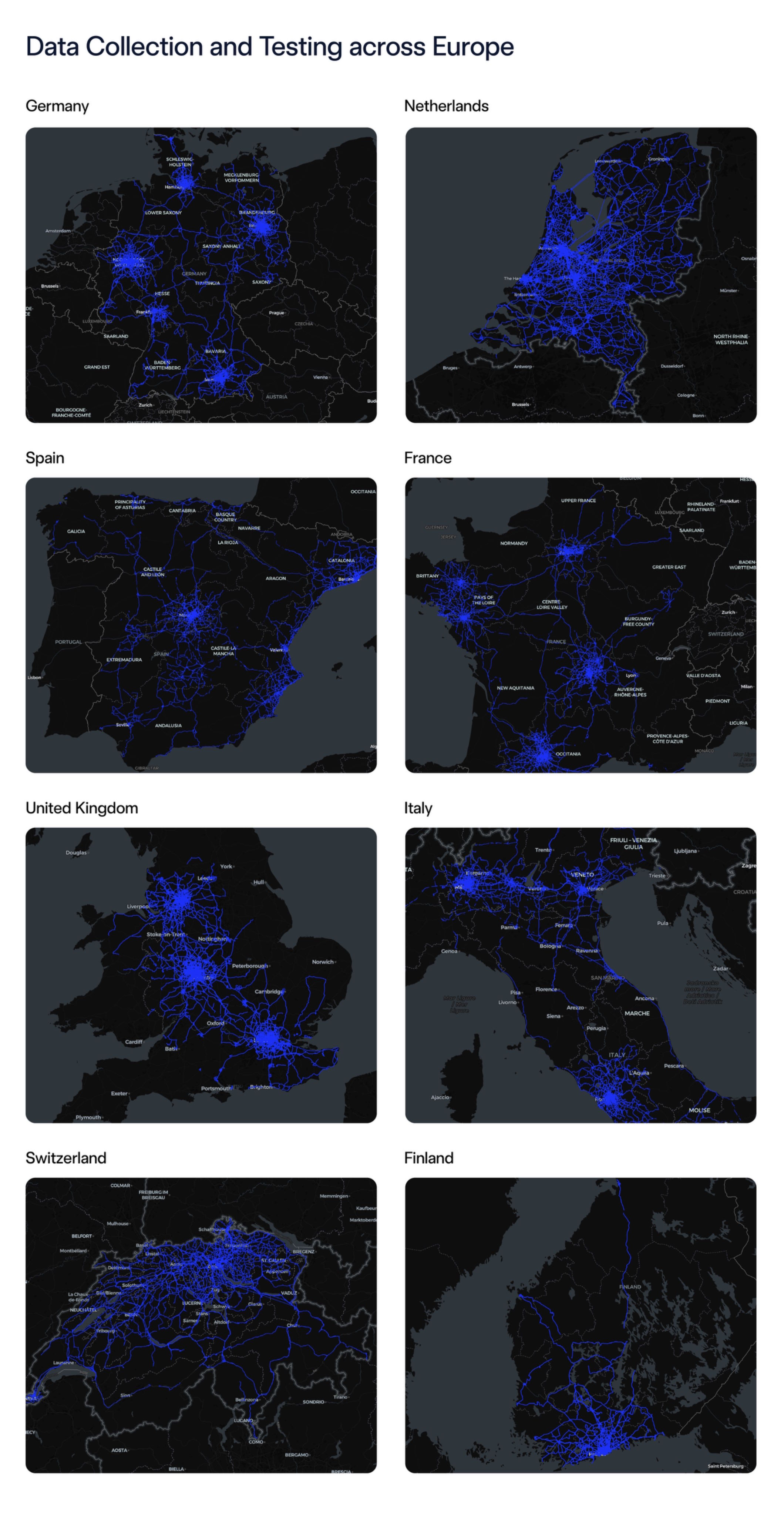
- Scenario testing: 230,000+ tests across multiple countries and all conditions with ~98% success rate
- Weather/lighting robustness: ~98% pass rate maintained in rain, fog, day, and night
- Recent performance: Over 4.1× safer than manual across 102 million km in the last 5 months in the five approved countries
- Regulatory framework: Compliant with UN-R-171 DCAS; exemptions pursued via EU Article 39 procedure
- Next milestone: Potential EU-wide approval vote scheduled for October 6, 2026
In-Depth Technical Analysis
Tesla’s decision to open-source the exact safety dashboard that underpinned the Netherlands RDW approval is a significant move toward regulatory transparency. This dashboard was distributed to every EU Member State in April 2026 and contains exclusively pre-approval data, giving regulators and the public a clean, contemporaneous view of system performance.
Crash Rate Superiority Across Road Classes
Across a massive 3 billion kilometer dataset from 2025, FSD Supervised delivered consistent major-crash reductions versus manual Tesla driving on every road type. The strongest gains appeared on arterial roads (69% reduction), followed by city streets (50%), highways (45%), and local roads (40%). These figures are not laboratory estimates—they reflect real mixed-traffic European conditions.
Intervention and Event Metrics
- Automatic Emergency Braking events drop by as much as 84%
- Harsh braking events fall by up to 81%
- Minor collisions during lane changes are nearly eliminated (99% reduction on highways, 93% off-highway) across 377 million recorded maneuvers
- Highway driver fatigue events are cut by 67%
Collectively these metrics demonstrate that FSD Supervised is not merely matching human performance—it is systematically removing the most common precursors to collisions.
Behavioral Compliance and Smoothness
The system remains at or below the speed of surrounding traffic 98% of the time, indicating conservative, traffic-harmonious behavior rather than aggressive acceleration. Engineering vehicles alone have completed 1.6 million kilometers with a perfect zero at-fault collision record, providing an additional high-confidence validation layer.
Scenario Coverage and Environmental Robustness
More than 230,000 structured scenario tests executed across multiple European countries and under all lighting and weather conditions achieved an approximately 98% success rate. Critically, that pass rate holds steady in rain, fog, daytime, and nighttime, confirming that the vision-based stack generalizes well beyond clear-weather highway driving.
Regulatory Pathway
Tesla deliberately engineered FSD Supervised to sit inside the existing UN-R-171 Driver Control Assistance Systems (DCAS) framework, then requested narrowly defined exemptions through the EU’s Article 39 procedure. The open-sourced dashboard constitutes the primary quantitative evidence supporting those exemptions. With a formal EU-wide vote now scheduled for October 6, 2026, the data package is positioned to accelerate broader market access.
Latest News & X Highlights
Tesla Europe, Middle East & Africa officially released the update and the supporting safety evidence on September 1, 2026. Here is the core announcement:
Key excerpts from the thread underscore the scale and urgency:
- “FSD is currently approved in five EU countries (NL, DK, BE, EE, LT), used by >70k customers for over 1 million km per day, and is 4.1x less likely to get into a crash compared to manual driving, measured across 100 million km on public EU roads.”
- “Leading up to a potential EU-wide approval vote for FSD Supervised on October 6th, 2026, we have decided to open-source one of the key pieces of evidence used to support the Netherlands approval.”
- “European countries recorded 19,400 road deaths in 2025. That’s around 53 deaths/day, with the vast majority of these crashes attributed to human error. These deaths are largely preventable with technology we have today.”
- “FSD Supervised is already saving lives where it’s approved – yet in much of Europe, that safety benefit remains locked behind bureaucracy.”
Supporting data cards released in the same thread quantify the advantages across crash rates by road class, AEB and harsh-braking reductions, lane-change safety, fatigue mitigation, speed compliance, engineering-fleet purity, and multi-condition scenario success rates—all reinforcing the same conclusion: supervised FSD is delivering measurable safety gains today.
Real-world Applications & Implications
In the five countries where FSD Supervised is already active, owners are accumulating real safety benefits every day. The 4.1× crash-rate advantage, combined with sharp drops in emergency interventions and fatigue events, translates directly into fewer collisions, lower insurance exposure, and reduced driver stress on long European journeys.
From a societal perspective, Europe still loses approximately 53 lives every day on its roads—the overwhelming majority tied to human error. Scaling a system that has already demonstrated multi-fold safety improvements across tens of millions of kilometers offers a concrete pathway to reverse that trend. The open-sourcing of the safety dashboard also sets a new transparency precedent that could accelerate regulatory confidence across other jurisdictions.
For Tesla owners, the immediate implication is expanded access: once EU-wide approval lands, the same supervised capability that is currently limited to five markets can be unlocked fleet-wide. For the broader industry, the data package raises the bar for what constitutes credible real-world evidence of autonomous system safety.
Final Verdict
Tesla has moved beyond claims and into verifiable, open-sourced evidence. FSD Supervised is already delivering 4.1× safer operation than human drivers across more than 100 million kilometers of European public roads, with consistent gains in every major safety metric and near-perfect scenario robustness. The October 6, 2026 EU-wide vote now stands as a clear inflection point. If the data continues to speak as loudly as it does today, supervised autonomy is poised to leave the pilot phase and become a mainstream safety feature across the continent. The technology is ready. The numbers are public. The only remaining question is how quickly regulation will catch up to the lives that can already be saved.