

The future of energy storage just got a massive upgrade. Tesla’s Megapack 3 is no longer a prototype or a promise—it is rolling off the production line, powering real grids, and rewriting the rules of long-duration storage. From Australia’s first 8-hour battery installation to a brand-new Megafactory in Texas that went from dirt to full production in just 16 months, the Megapack platform is delivering the scale, speed, and reliability the energy transition desperately needs. This in-depth technical review breaks down every critical advancement, real-world deployment data, and the engineering decisions that make Megapack 3 the most advanced utility-scale battery system on the planet right now.
Key Features & Advantages
- ✅ Factory-to-grid deployment measured in weeks, not months
- ✅ 8-hour long-duration capability proven in commercial operation
- ✅ Charge rate twice as fast as discharge for superior renewable capture
- ✅ Modular architecture enabling rapid multi-GWh projects
- ✅ Fully integrated power conversion, thermal management, and controls
- ✅ Designed for high-cycle, multi-decade service life under real grid conditions
- ✅ Global deployment footprint already spanning 65+ countries
Technical Specifications
- Product: Tesla Megapack 3
- Energy Capacity (per unit): Approximately 3.9 MWh (depending on configuration)
- Power Rating: Up to ~1.9 MW continuous
- Duration: Configurable from 2-hour to 8-hour+ systems
- Charge/Discharge Asymmetry: Charge rate up to 2× discharge rate (critical for solar-heavy grids)
- Factory Capacity: Brookshire, Texas Megafactory – 50 GWh/year dedicated to Megapack 3
- Previous Factory: Lathrop, California (still active)
- Thermal System: Liquid-cooled with advanced battery thermal management
- Inverter: Fully integrated bi-directional power conversion system
- Grid Compatibility: 50/60 Hz, multiple voltage levels, advanced grid-forming capability
- Deployment Speed: Units leave the factory ready for rapid site installation and commissioning
- Lifecycle: Engineered for high cycle counts with minimal degradation over decades
In-Depth Technical Analysis
The Megapack 3 Architecture
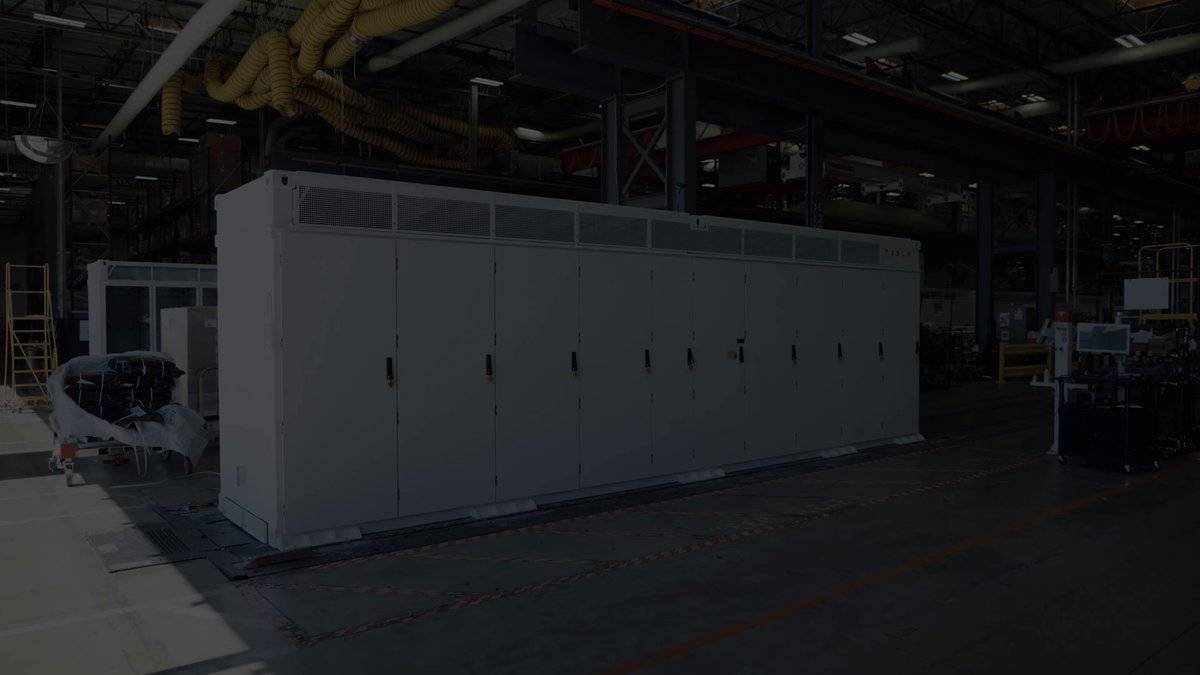
Megapack 3 represents Tesla’s third major generation of utility-scale storage. Unlike earlier systems that required extensive on-site integration, Megapack 3 arrives as a complete, self-contained energy storage and conversion unit. Each cabinet houses battery modules, liquid cooling, power electronics, fire suppression, and monitoring systems in a single outdoor-rated enclosure. This design philosophy dramatically reduces civil works, interconnection complexity, and commissioning time.
The decision to prioritize charge-rate asymmetry is particularly significant. In solar-dominated grids, the ability to absorb surplus generation twice as fast as it is later discharged allows operators to capture more midday energy and deliver it across evening peaks and into the night. The Limondale project in New South Wales is the first commercial demonstration of this capability at true 8-hour duration scale.
Manufacturing Breakthrough at Brookshire
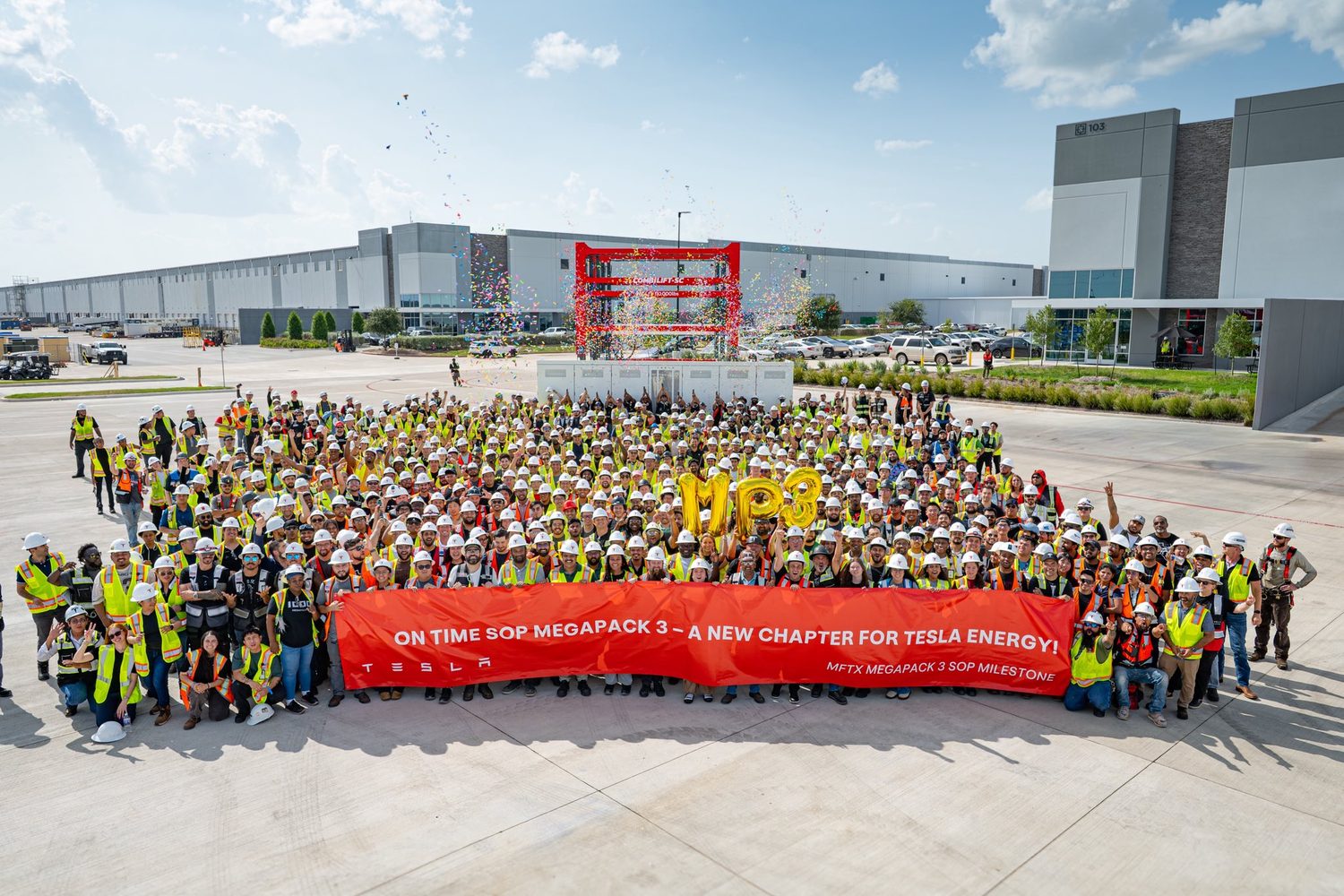
Tesla’s newest Megafactory in Brookshire, Texas, reached full production of Megapack 3 units only 16 months after groundbreaking—an extraordinary achievement in heavy industrial construction. The facility is purpose-built for Megapack 3 with a designed annual capacity of 50 GWh. Combined with the existing Lathrop factory, Tesla now possesses one of the largest dedicated energy storage manufacturing footprints in the world.
- Groundbreaking to operation: 16 months
- Designed output: 50 GWh of Megapack 3 capacity per year
- Location: Brookshire, Texas (near Houston)
- Focus: High-volume production of the latest generation units
Deployment Speed as a Competitive Advantage
One of the most under-appreciated strengths of the Megapack platform is logistics and installation velocity. Tesla has refined the process from factory exit to grid connection into a highly repeatable sequence. Units are transported as complete systems, placed with minimal foundation work, and electrically connected using standardized interfaces. This speed is becoming a decisive factor for utilities and developers racing to meet renewable integration deadlines and capacity market requirements.
Latest News & X Highlights
Recent official updates from Tesla’s Megapack channels highlight three major developments: the commercial operation of Australia’s first 8-hour system, the start of Megapack 3 production in Texas, and the strategic positioning of Megapacks as the energy foundation for AI-scale compute growth.
Australia’s Limondale project marks a landmark moment for long-duration storage:
The factory-to-grid process continues to be refined for maximum speed and simplicity:
Megapack 3 production has officially begun at the new Texas Megafactory:
Tesla is also framing Megapacks as critical infrastructure for the coming era of energy-intensive AI:

Real-world Applications & Implications
The combination of 8-hour duration, asymmetric charge rates, and rapid deployability unlocks several high-value use cases:
- Solar + Storage Firming: Capture excess midday generation and deliver clean power through evening peaks and overnight.
- Grid Stability Services: Fast response, synthetic inertia, and voltage support in weak or high-renewable grids.
- Capacity Markets: Provide reliable, dispatchable capacity without fossil fuels.
- Industrial & Data Center Power: Support energy-intensive facilities, including the next generation of AI training clusters.
- Remote & Island Grids: Replace diesel generation with high-reliability battery systems.
With production capacity now expanding rapidly in both California and Texas, Tesla is positioning Megapack as a foundational technology for the dual transitions of clean energy and AI-driven electricity demand growth. The Limondale project demonstrates that 8-hour systems are no longer theoretical—they are operating today and delivering measurable value.
Final Verdict
Tesla Megapack 3 is the most significant leap in commercial energy storage hardware this decade. The combination of higher duration capability, asymmetric power electronics, factory-scale manufacturing at 50 GWh per year, and proven real-world deployments creates a product that is simultaneously more capable and more deployable than anything else currently available at utility scale. Australia’s first 8-hour system is already online. Megapack 3 units are rolling off the line in Texas. Global installations now span six continents. The energy storage bottleneck that has constrained renewable growth for years is finally being broken—at industrial speed. The next phase of the energy transition just shifted into high gear.